
Location: Kilmore, VIC | Installer: UNIfied Energy Services
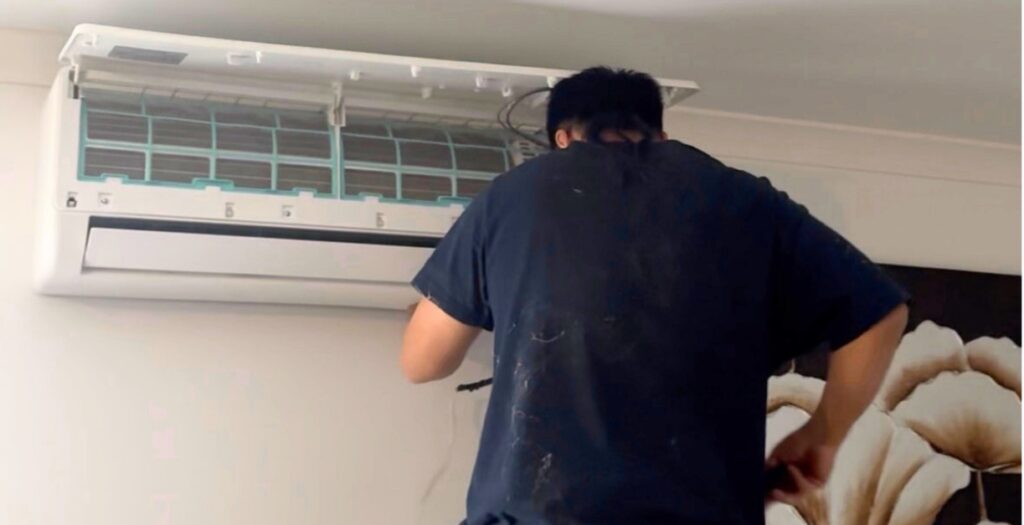
Key Highlights The Challenge This Kilmorehousehold needed to transition from an outdated gas heating system and legacy air conditioner to a modern, energy-efficient climate solution. The primary objective was to deliver multi-zone heating and cooling across key living areas while safely decommissioning and removing old gas and cooling assets. The Solution UNIfied decommissioned the gas unit, removed the old air conditioner, and installed a Rinnai Inverter Multi-Split System. By connecting two high-capacity indoor wall units to a single outdoor unit, the installation preserved outdoor space while delivering precise temperature control for individual zones indoors. System Specifications The Result By taking advantage of over $4,700 in VEEC rebate incentives, the out-of-pocket cost for this top of the range Rinnai Multi-Split system was reduced to just $5,000 (inc. GST), delivering an economical solution to their heating and cooling needs
Location: Box Hill South, VIC | Installer: UNIfied Energy Services

Key Highlights The Challenge This Box Hill South household required a transition from an outdated gas heating system to a modern, energy-efficient electric solution. The requirement was to provide whole-of-home heating and cooling via an underfloor distribution system while safely decommissioning and removing legacy gas assets. The Solution UNIfied decommissioned the old gas unit, cleared the site rubbish, and installed a high-capacity Daikin 16kW Ducted Underfloor System. The 9-outlet underfloor layout delivers uniform airflow across all zones, equipped with smart WiFi connectivity for precise climate management. System Specifications The Result By combining nearly $5,000 in VEEC rebate incentives with a significant further discount from UNIfied, the homeowner was able to reduce the total project cost to approximately $13,500 for the installation of their 9-underfloor-outlet all-electric heating and cooling system.
Location: Clyde, VIC | Installer: UNIfied Energy Services
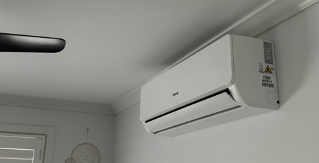
Key Highlights The Challenge The Clyde-based family needed to replace an inefficient gas heating system with a modern, eco-friendly heating and cooling solution. The main challenge was providing multi-zone temperature control across multiple rooms without cluttering the exterior with multiple outdoor units. The Solution UNIfied safely decommissioned the gas unit and installed a Rinnai Inverter Multi-Split System. Routing multiple indoor wall units back to a single outdoor unit preserved outdoor space while delivering precise, energy-efficient multi-zone climate control. System Specifications The Result By leveraging premium Rinnai engineering and VEU rebates, the household achieved a low-cost, multi-zone electric climate system that significantly reduced ongoing energy bills.
GEELONG TREASURY | VIC
-
Solar PV Systems
- Wetherill Park, NSW
-
System Size
- 99.6kW
-
Annual Energy Savings
- $44,368
Lock In Higher Solar & Battery Rebates Before They Reduce

If you’ve been considering adding solar panels or home battery storage to your property, securing a solar battery rebate right now might be your best financial move. With Federal clean energy incentives set to step down starting 1 January 2027, homeowners have a limited window to claim the higher rebates currently available through 2026. The Federal Government helps offset upfront costs through Small-scale Technology Certificates (STCs), making every eligible solar battery rebate much higher this year than it will be next year. Why Are Solar and Battery Prices Changing? The Federal Government’s clean energy programs help offset the upfront cost of eligible installations through Small-scale Technology Certificates (STCs). From 1 January 2027, the number of STCs allocated to eligible systems will decrease, leading to a 15% to 20% reduction in government incentives. In short, installing the exact same solar or home battery system will cost noticeably more next year than it does right now. 3 Key Incentives Available Right Now Federal Solar Rebate (STC Scheme): The current STC scheme delivers higher upfront discounts for eligible solar systems installed throughout 2026. Once the calendar flips to January 2027, these values shrink, raising your out-of-pocket expenses. Home Battery Incentives: Battery storage incentives are on a step-down schedule, reducing every six months. The next major reduction hits on 1 January 2027, followed by another scheduled drop on 1 July 2027. NSW Home Energy Saver Program: Eligible homeowners in New South Wales can access up to $15,000 in zero-interest finance for solar and battery upgrades, with flexible repayment terms spread across up to 10 years. Secure Your Savings Before the Deadline Waiting until next year means leaving money on the table. To lock in the highest possible rebates and protect your home from rising energy costs, get a quote and schedule your installation before the 2027 cuts take effect. Would you like me to tailor this piece further for a specific local region or add a custom call-to-action for your business? Why Choose UNIfied? At UNIfied Energy, we’re committed to making your electrification journey seamless. We help Australian households and businesses: Reduce energy bills and operating costs Lower carbon emissions and confidently adopt sustainable practices. Contact UNIfied Energy today or call 1300 817 847 to achieve greater savings in these precarious times and start your journey of clean energy living.
Can Your Electric Vehicle Power Your Home? The Rise of Bidirectional Charging
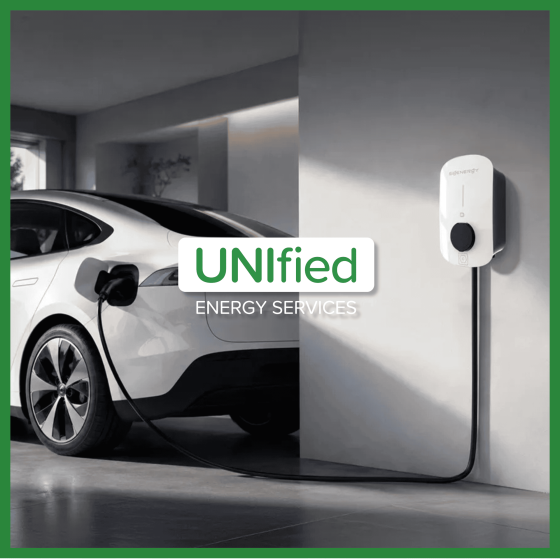
It might sound like sci-fi, but for a growing number of Australian households, an electric vehicle (EV) is becoming much more than just a way to get from A to B. With advanced bidirectional charging technology, select EVs can now store excess energy from your solar panels during the day and help power your home after sunset. What Is Bidirectional EV Charging? (V2L, V2H & V2G) Unlike standard EV chargers that only flow power one way (from the grid into your car), bidirectional chargers allow energy to flow both ways. This energy-sharing capability generally falls into three categories: V2L (Vehicle-to-Load): Power household appliances, camping gear, or power tools directly from your EV. Perfect for off-grid trips or emergency backup. V2H (Vehicle-to-Home): Use your EV battery to power your entire household, functioning just like a giant home battery storage system. V2G (Vehicle-to-Grid): Export stored energy from your EV back into the main electricity grid during periods of peak demand, potentially earning credits on your energy bill. Why Bidirectional Charging is a Game-Changer for Solar Households A standard residential home battery typically stores around 10kWh to 15kWh of energy. In contrast, many modern EVs pack a massive 60kWh battery or more-giving you enough stored energy to potentially run an average home for several days. For homes with solar PV systems, this unlocks a powerful opportunity: Charge your EV using free, clean solar energy during peak daylight hours. Discharge a portion of that stored power to run your household during expensive evening peak periods, slashing your grid reliance. What’s the Catch? Current Challenges in Australia While the technology is fully functional, bidirectional charging is still in its early stages in the Australian market. Keep these factors in mind: Vehicle Compatibility: Not all EV makes and models currently support V2H or V2G capabilities. Hardware Costs: Specialized bidirectional chargers are still relatively expensive compared to standard EV chargers. Installation & Compliance: Setup requires specialized grid interconnection approvals and professional installation. Incentives: Current Federal and state battery rebates generally apply to stationary home batteries rather than EV charging hardware. Is Bidirectional EV Charging Worth It Today? For most homeowners right now, installing a dedicated home battery remains the simplest, most cost-effective path to energy independence. However, as EV technology matures and bidirectional hardware becomes more mainstream, your car is set to become one of the largest energy assets in your household. The takeaway? If you’re already investing in rooftop solar and energy storage, you’re building the ultimate foundation for an energy-smart future where your EV can step up and play an even bigger role. Why Choose UNIfied? At UNIfied Energy, we’re committed to making your electrification journey seamless. We help Australian households and businesses: Reduce energy bills and operating costs Lower carbon emissions and confidently adopt sustainable practices. Contact UNIfied Energy today or call 1300 817 847 to achieve greater savings in these precarious times and start your journey of clean energy living.
COMPLETE SHOPFITTERS | VIC
-
Solar PV Systems
- Wetherill Park, NSW
-
System Size
- 99.6kW
-
Annual Energy Savings
- $44,368
Your Guide To Solar Batteries: 2026
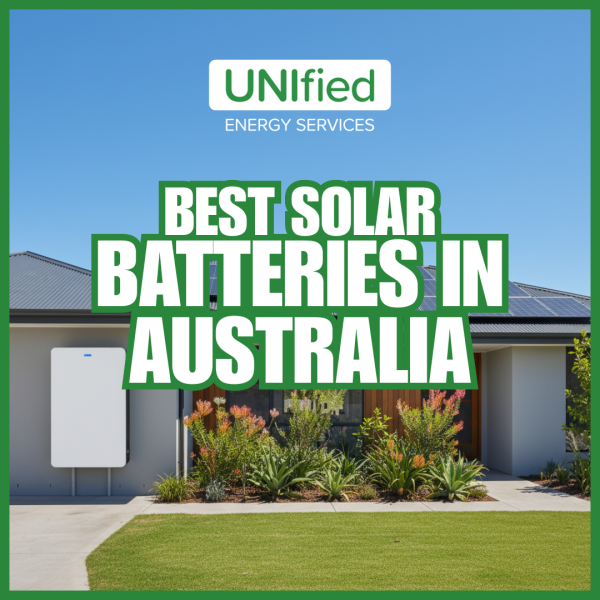
Choosing the right solar battery for your home depends heavily on your household’s energy profile, budget, and backup power requirements. With rising utility expenses and strong battery rebates driving adoption, the market offers several standout options tailored to different needs. UNIfied’s View At UNIfied Energy, we don’t believe in “best battery” rankings. Every home has different energy needs, budgets, and priorities. For example, while premium brands may offer longer warranties and additional features, a lower-cost battery can sometimes deliver a better return on investment through a faster payback period. This guide is provided as an overview of some of Australia’s leading battery brands and should be used as a starting point for your research, not a one-size-fits-all recommendation. Popular Solar Battery Brands In The Market Sigenergy: A top choice for installers and tech-forward homes, featuring a modular stack design, seamless EV charging integration, and strong smart-home management. Sungrow: A trusted mid-to-high range option providing scalable capacity, robust local support, and competitive performance without a heavy price tag. Tesla Powerwall 3: Known globally for its reliable 13.5 kWh usable storage, robust whole-home backup capabilities, and highly polished user app. BYD: Utilises safe lithium iron phosphate (LFP) chemistry and offers flexible sizing options compatible with numerous inverter brands. Alpha ESS & GoodWe: Excellent options for budget-conscious homeowners or those pairing storage directly with existing GoodWe solar equipment to maximise overall system value. Key Factors When Choosing Phase Requirements: Check whether your property is single-phase or three-phase, as backup functionality can vary between systems. Modular Expansion: Opt for stackable systems if you plan to scale up your energy storage over time as household consumption grows. Get Ready for Summer Before the Heat Arrives History has shown that demand for air conditioning installations and repairs surges during extreme heat events. Many homeowners don’t think about cooling until the first major heatwave arrives, which often leads to long waiting times and increased pressure on older, failing systems. Why Choose UNIfied? At UNIfied Energy, we’re committed to making your electrification journey seamless. We help Australian households and businesses: Reduce energy bills and operating costs Lower carbon emissions and confidently adopt sustainable practices. Contact UNIfied Energy today or call 1300 817 847 to achieve greater savings in these precarious times and start your journey of clean energy living.
Switch from Gas Ducted Heating to All-Electric HVAC: Spring Upgrade Guide
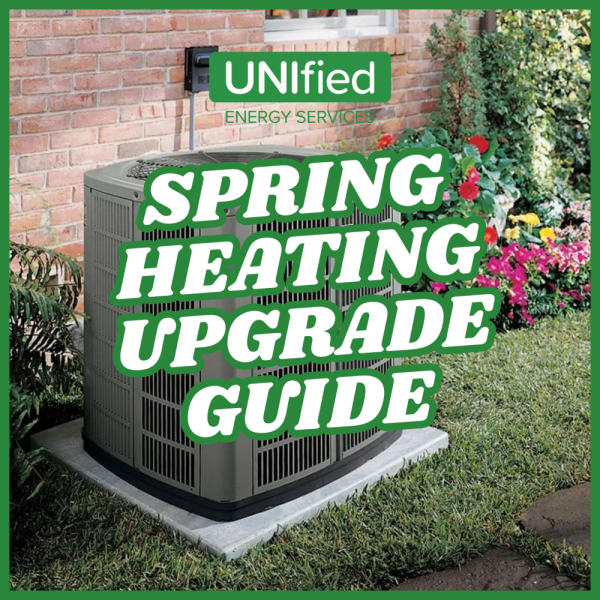
As winter comes to an end, most Australian households are looking forward to lower energy bills and warmer days ahead. For many families, Spring also brings an opportunity to rethink how they heat and cool their homes. If you’re still relying on a gas ducted heating system, now could be the perfect time to consider making the switch from gas ducted heating to an all-electric HVAC solution before summer arrives. Saying Goodbye to Winter Gas Bills Throughout winter, gas heating is often one of the biggest contributors to household energy costs. As temperatures start to rise, many homeowners are seeing first-hand just how much their gas heating has cost them over the colder months. Rather than preparing for another year of rising gas costs, more Australians are choosing to transition to high-efficiency electric heating and cooling systems that can deliver comfort all year round from a single solution. Modern reverse-cycle HVAC systems provide both heating and cooling, allowing households to replace ageing gas heaters and older air conditioners with one integrated system. One System for Every Season One of the biggest advantages of switching from gas heating to a modern HVAC system is simplicity. Instead of maintaining separate gas heating and air conditioning systems, a reverse-cycle HVAC solution can: Heat your home efficiently during winter Cool your home effectively during summer Improve air circulation year-round Provide greater control over different areas of your home Reduce ongoing maintenance requirements and eliminate gas supply charges With Spring conditions already arriving across Victoria and New South Wales, now is an ideal time to upgrade before installers enter their busiest peak season. Get Ready for Summer Before the Heat Arrives History has shown that demand for air conditioning installations and repairs surges during extreme heat events. Many homeowners don’t think about cooling until the first major heatwave arrives, which often leads to long waiting times and increased pressure on older, failing systems. By upgrading your ducted system during Spring, households can enter summer with complete confidence knowing their home is ready for the hotter months ahead. Why Choose UNIfied? At UNIfied Energy, we’re committed to making your electrification journey seamless. We help Australian households and businesses: Reduce energy bills and operating costs Lower carbon emissions and confidently adopt sustainable practices. Contact UNIfied Energy today or call 1300 817 847 to achieve greater savings in these precarious times and start your journey of clean energy living.
What’s the Right Battery Size for a Solar Sharer Plan?
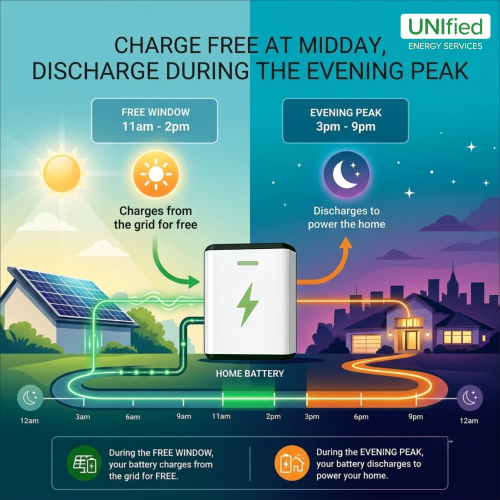
What is the right battery size for a solar sharer plan? Compare total battery savings over a 15-year lifespan against simply investing that same money, using a “real” (inflation-adjusted) return, since that keeps everything in today’s dollars. A fair benchmark is beating what the money would earn going toward a mortgage instead, historically around 2% real return; using a 2.5% target builds in some safety margin. The calculation accounts for: Capacity fading to roughly 70% by year 15 (so ~85% average usable capacity) VPP payments (~$150/year plus $1/kWh of capacity) NSW’s VPP incentive, worth up to ~$1,000 for larger batteries Installed costs, which drop per kWh as battery size increases Electricity prices assumed flat for 8 years, then 20% lower for the remainder, to account for possible future price falls The result: plotting battery savings against the investment-return benchmark shows the two lines crossing at just over 28 kWh. The point where a battery still beats parking the money elsewhere. Chase a higher return (say 4%) and the ideal size drops to about 22 kWh; accept a lower one (2%) and it climbs to around 31 kWh. Push for a 5% return, though, and no battery size gets there. On backup power: A battery charged fresh every day from a free window is often already sitting on a useful reserve if the grid goes down. So a dedicated backup buffer matters less than with batteries charged the traditional way. Sizing up by just ~5% is enough to guarantee power for essentials during an outage, though for many households, that extra cost isn’t worth it if blackouts are rare. For a typical household using around 6,500 kWh a year, roughly 28 kWh comes out as the financial sweet spot, bigger than most people would guess. Since rebates are generally a once-per-property deal, erring larger tends to be the safer mistake to make. Why Choose UNIfied? At UNIfied Energy, we’re committed to making your electrification journey seamless. We help Australian households and businesses: Reduce energy bills and operating costs Lower carbon emissions and confidently adopt sustainable practices. Contact UNIfied Energy today or call 1300 817 847 to achieve greater savings in these precarious times and start your journey of clean energy living.